I’ve heard of “self help” but surely this “help yourself” sign at Glasgow Airport is taking things a bit far? At least you know you’re on your own…


I’ve heard of “self help” but surely this “help yourself” sign at Glasgow Airport is taking things a bit far? At least you know you’re on your own…
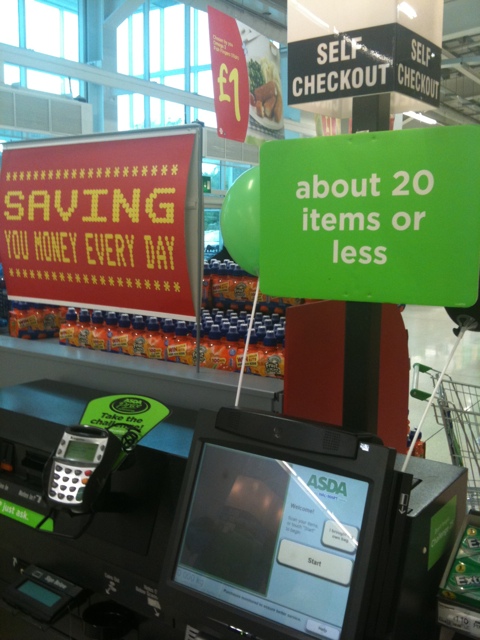
ASDA has raised the bar on the classic checkout clanger. Not content with using “less” rather than “fewer”, it has imposed a strict item limit of “about 20”. Who’s counting?

Usain Bolt was disqualified from the final of the 2011 World Championship 100m for one false start. The IAAF rules are now coming under fire for being too harsh, since they afford no latitude for accidental false starts.
The false start rule used to be more lenient. Historically, every athlete would receive a warning on their first false start and disqualification on their second. In 2003, the rule changed so that the first false start warning applied to the entire field rather than just the offending athlete. In 2010, warnings were eliminated entirely. Avoiding delay to TV schedules was a key driver for streamlining the rule, but I suspect that broadcasters would rather show “The Lightning” competing than have him disqualified on their account.
So, let’s explore the rule and consider alternatives.
Continue reading

Here’s another example of a misplaced “only” messing up the meaning of an important-looking sign.
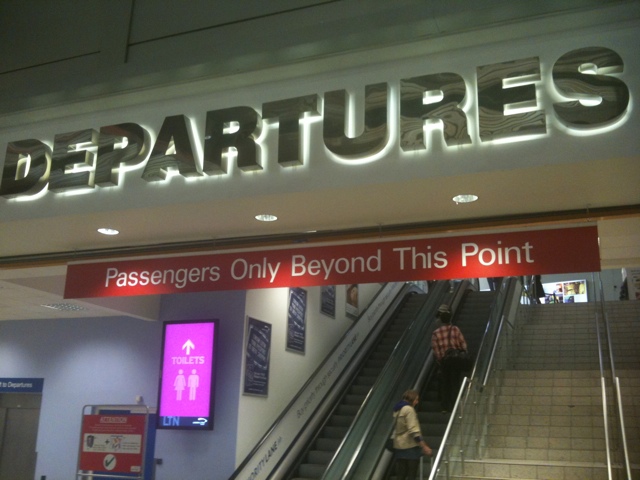
The photo was taken in a public area of Luton Airport. As a departing passenger, I was evidently in the wrong place, because the sign required “Passengers Only Beyond This Point” and I was not beyond that point.
What they really meant was “Only Passengers Beyond This Point”. For greater ease and accuracy, they could have simply written two words: “Passengers Only”.

Seems to have been a week for bad adverts (or “badverts”, as I have decided to call them).
First I saw the Nature Valley advert, proclaiming “We wanted to increase deliciousness by 200%… So we put two bars in each pack”. How embarrassing that they messed up their percentages! It would have been safer to use words like “doubly delicious”, but they threw in a spurious statistic instead. Still, it got them lots of unexpected publicity.

Then I saw a puzzling proposition from Orange: “Free iPhone for just £25 a month”. Has inflation spiralled out of control? £25 a month seems steep for something which was free four words earlier. That can’t be right. Maybe they mean “free” as in freedom, so the handset is not locked to their network and is “jailbroken” so that it is freed from Apple’s functionality shackles? No, and No. And yet freedom seems a reasonable expectation from a company whose parent is called “Everything Everywhere”…


Recently did a ScrumMaster course at work. Best bit was building a LEGO city to practise agile development. Check out the photo of the city we built. 20 people, 4 self-organising teams of 5 people, 4 sprints of 11 minutes each. Great fun. And educational too!


For some time I’ve held Domino’s in high regard for the ease of their online pizza ordering. Fun and functional, I thought. Today I experienced an acute counter example from my attempt to order a pizza on the way home from work.
Step 1 – Start the iPhone app – denied!

Step 2 – Upgrade the app – denied!
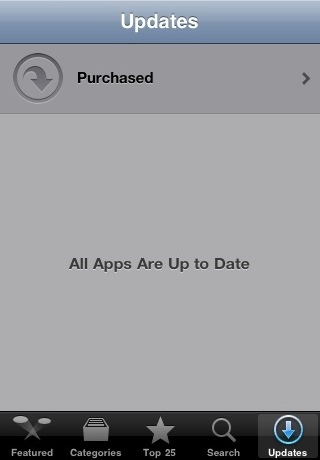
Step 3 – Realise they’ve created a new app rather than updating the previous one
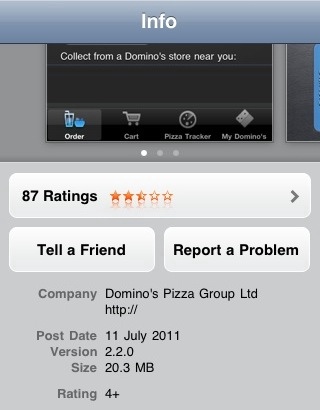
Step 4 – Download the new app – denied!
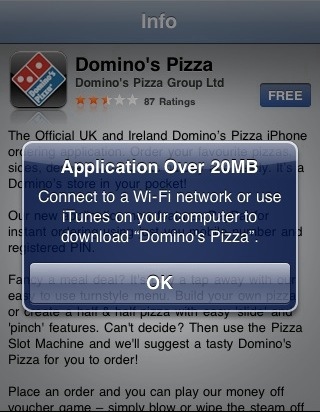
Step 5 – Give up on app and decide to use web browser, only to be told…

Aaaaargh! I persevered and ordered successfully eventually. Would have been far quicker to place my order by phone – but smartphones aren’t really for phoning, are they?! In the end the pizza was ok, but the ordering process for once left a bitter taste in my mouth!
